eISSN: None / ISSN: None
Register
Login
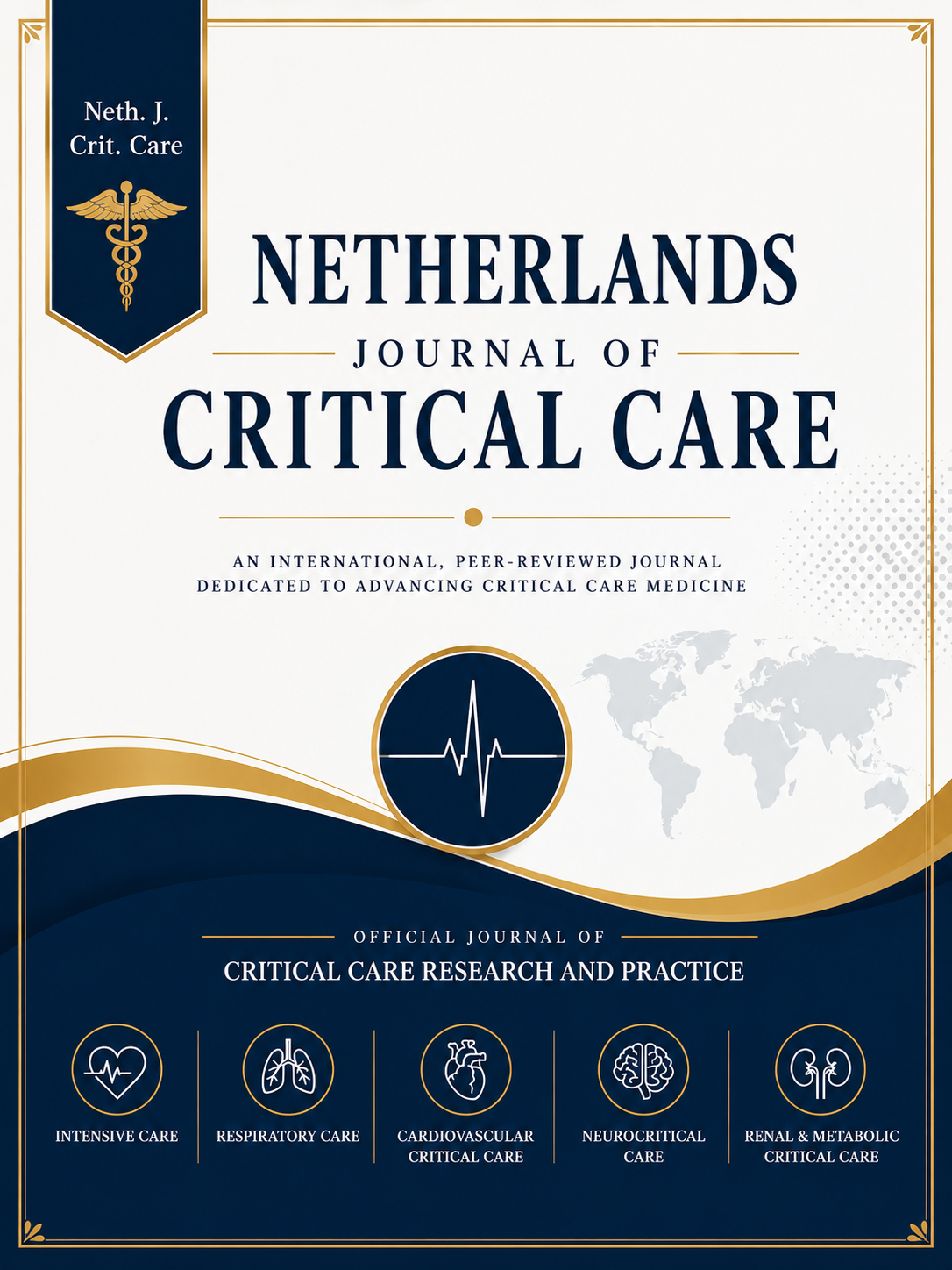
Netharland Journal of Critical Care
2019,
Volume 27,
Issue 4
: 144-0
Editorial
Light and noise nuisance … deciphered yet underappreciated ‘rosetta stone’ of the modern ICU?
Abstract
In everyday life, we take for granted that public authorities protect us from an unhealthy environment, including light and noise pollution. In recent years, about 1200 kilometres of noise barriers have been built alongside Dutch highways with costs approaching a billion euros.[1] Also, more than 50 cities in the Netherlands have successfully taken initiatives to reduce the artificial light pollution in the past six years, as our country is well known to rank among the literally most illuminated ones in the world.[2] These investments seem to be reasonable as adverse health effects from environmental light and noise pollution have long and widely been recognised.[3,4] How these potentially detrimental effects of artificial light and distressing noise acting on the human body translate into the best possible care that we strive to provide within our modern ICU environment is an area of increasing professional awareness, interest and research. Yet, we all realise that not only light and noise, but numerous physical and psychological stressors may negatively affect individual ICU patients. Also, the impact of these factors may vary considerably among individuals, which makes it even more difficult for caregivers to prioritise among apparently competing aspects of care in their daily practice.[5] A comprehensive, narrative review by Koen Simons and colleagues in this issue of the Netherlands Journal of Critical Care provides us with up-to-date information on the ‘impact of intensive care unit light and noise exposure on critically ill patients’.[6] Here, we gain more insights and learn how a multimodal approach to our ICU environment may aid to optimise light exposure and reduce noise. This may not only improve our patients’ sleep and general wellbeing, but also reduce the incidence of delirium. The latter seems especially relevant since the pharmacological prevention of delirium has repeatedly been shown to be disappointing, as recently confirmed again in a large Dutch trial.[7] All this evidence sets the stage to further promote nonpharmacological interventions in the ICU to prevent delirium.[8] Therefore, we should do our best to limit controllable stressors in the ICU in order to improve patient comfort and hopefully enhance the individual prognosis.[6] As our traditional focus on the medical and technical aspects of critical care has led us to asymptotically reach current therapeutic optima; human factors and soft skills are no longer far in the horizon of the modern ICU. © 2019, Netherlands Society of Intensive Care. All rights reserved.
License
Copyright (c) Netharland Journal of Critical Care
 Creative Commons License
This work is licensed under a Creative Commons Attribution 4.0 International License.
All papers should be submitted electronically. All submitted manuscripts must be original work that is not under submission at another journal or under consideration for publication in another form, such as a monograph or chapter of a book. Authors of submitted papers are obligated not to submit their paper for publication elsewhere until an editorial decision is rendered on their submission. Further, authors of accepted papers are prohibited from publishing the results in other publications that appear before the paper is published in the Journal unless they receive approval for doing so from the Editor-In-Chief.
Neth. J. Crit. Care open access articles are licensed under a Creative Commons Attribution-ShareAlike 4.0 International License. This license lets the audience to give appropriate credit, provide a link to the license, and indicate if changes were made and if they remix, transform, or build upon the material, they must distribute contributions under the same license as the original.
Recommended Articles
Volume 27, Issue 4
Downloads
 Download PDF
 Download XML
Citations
2612 Views
0 Downloads
Share this article




Indexations


Useful Links
Submit Article
Peer Review Process
Advertising Policy
Guidelines for Reviewers
Manuscript Submission
Guide for Authors
Guide for Editor
Editorial Policies
Publication Ethics Policy
Research Ethics Policy
Human and Animal Rights
Authorship and Contributorship
Informed Consent Policy
Conflicts of Interest
Preservation Policy
Generative AI Policy
Data Sharing Policy
Open Access Statement
Content Licensing
Copyright and Permission
Quality Control System
Policy of Screening for Plagiarism Process
Policy of Dealing with Allegations of Research Misconduct
Corrections and Retractions
Complaints and Appeals
Data and Reproducibility
Contact Us
Visits in the last year
View statistics
Netharland Journal of Critical Care
 This work is licensed under a Creative Commons Attribution-NonCommercial-NoDerivatives (CC BY-NC-ND) license. Open Access Publication.

Copyright © None. All rights reserved.